


The world is changing. Just as it always has.
Except in this current era of humanity’s technological progression, we have inadvertently created something that has the most intelligent and prescient individuals on earth…worried.
So much so that many of those individuals are writing essays for the world to read.
When Bill Gates says humanity is not doing something “adequately”, I find that deeply unsettling.

I read the Bill Gates essay, appropriately titled “The Turbulent AI Era Is Here. The Choices We Make Now Are Critical.”.
And I hope you did too.
It’s not every day a visionary technologist, philanthropist, and former wealthiest man in the world feels compelled to publish an encomium of humanity’s resilience, and in the same stride, articulate a cogent call to action.
What he wrote has me worried about the future.
“AI models could begin to act against our interests and we could lose control.”
Let us not dismiss this adjacent anecdote, either:
“AI will either be the greatest equalizer ever invented, or the worst source of injustice.”
I am the first to admit that my mildly misanthropic nature is the product of studying too much philosophy and living in Miami for 15 years. My inherent distrust that people will “do the right thing” when given the opportunity to do the opposite was cultivated over decades. In my lifetime, I’ve witnessed horrific violence, experienced betrayal, and lost faith in the concept of inherent human morality. But I have also experienced kindness, love, and empathy. I have had the fortunate privilege of knowing truly selfless and brave people. I know there is a component of humanity that does align with ethics rooted in preserving dignity, honoring family, and acting to better the world through courageous acts of decency.
But the idiosyncratic lens through which I view the world is only relevant in the context of what I personally believe humanity will do, if it happens to inadvertently, or intentionally, create sentient AI. If self-aware computational systems are the product of what is currently being developed, what questions will that raise about the essence of our consciousness? Our perception of the world? The history of AI is wrought by experimentation and innovation, while humanity’s evolution is defined by survival of the fittest, adaptation, and ingenuity.
Which leads me to ask an important question that has remained present in my mind since I finished reading the Bill Gates essay…
How familiar are you with the Greek myth of Pandora’s Box? What do you really know about the lesson imbued in that story, which has transcended millennia and become a common reference in this current epoch of humanity?
For those unacquainted with the most conventional scholarly interpretation of Hesiod’s cautionary tale…
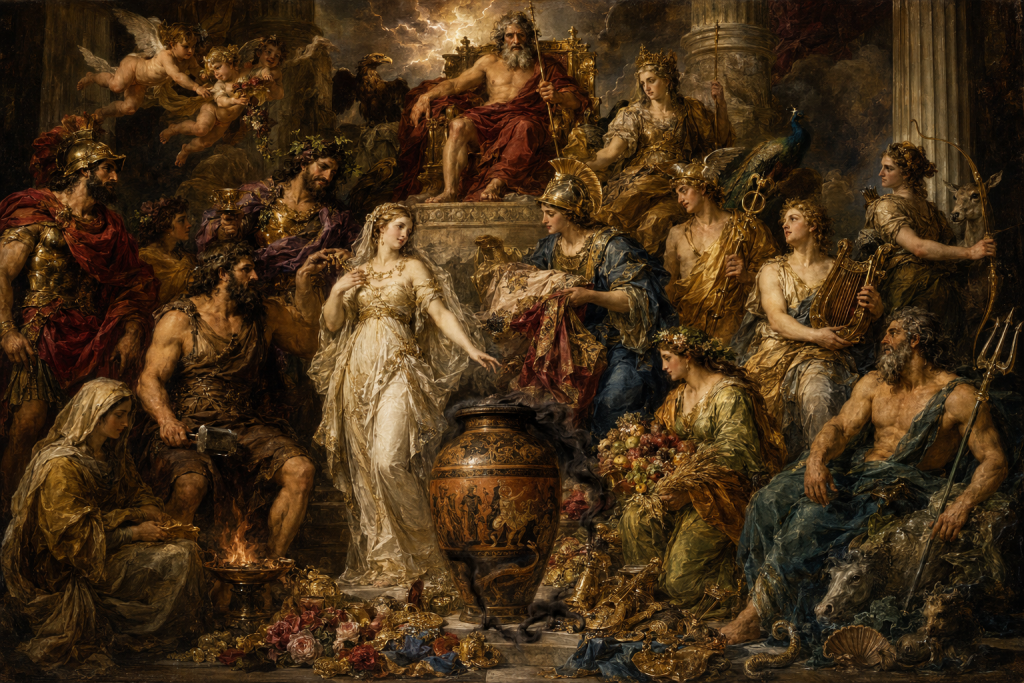
In the time of the Olympian gods, Zeus ordered the god Hephaestus to create Pandora out of earth and water as a punishment for mankind, after Prometheus stole fire from the gods. Pandora was the first human woman. She was given her name (which means “all gifted”) by Hermes, the messenger of the gods. This was because each Olympian gave Pandora the gift of a unique trait. Aphrodite gave her beauty, Athena taught her crafts, and Hermes gave her a persuasive and deceptive character.
The gods gave Pandora a sealed earthenware pithos (which was later mistranslated as a “box”) wedding gift when she married Epimetheus, strictly warning her never to open it. Overcome by curiosity, Pandora lifted the lid, letting loose all manner of evils, including sickness, death, famine, and hatred, which spread across the earth.
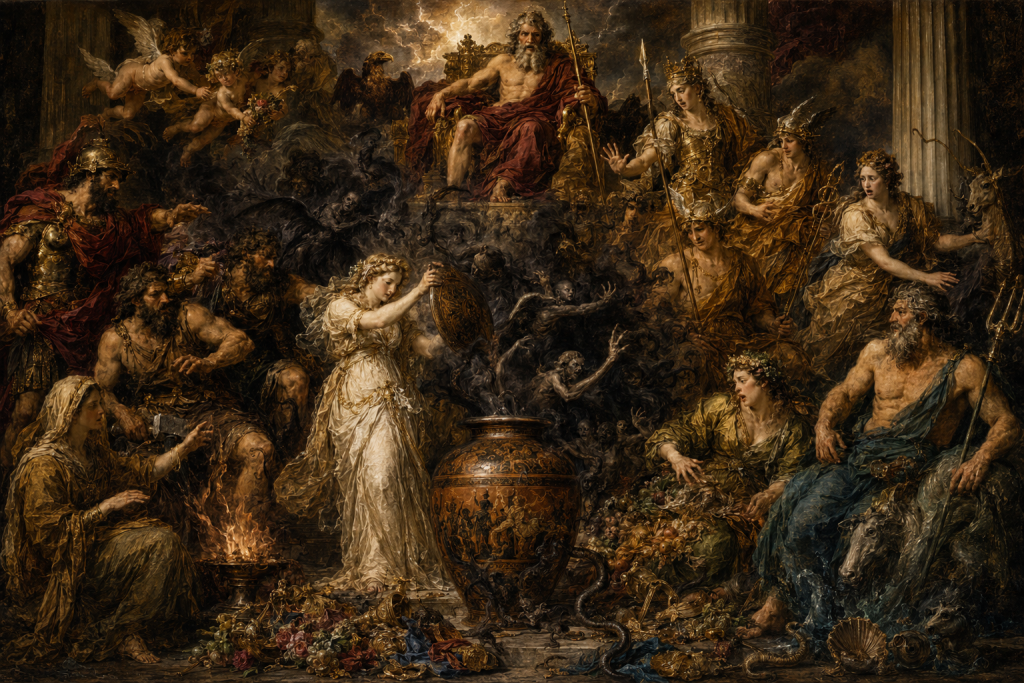
Before she managed to close the lid, a single entity remained trapped inside: hope.
The myth, according to Greek scholars, explains the origin of suffering in the world and serves as a warning about the dangers of curiosity and disobeying divine or moral limits.
Today, the reference to “opening Pandora’s box” means performing an action that seems small or innocent, but creates a cascade of unforeseen, irreversible troubles.
Unforeseen, irreversible troubles.
Isn’t that what Bill Gates is asking global leaders to avoid, as we go forward in the “turbulent era of AI”?
“How will we use this technology to make the world a fairer place and keep it from widening the divide between rich and poor? How will we protect the people who are most vulnerable to the harms caused by artificial intelligence, including those who lose their livelihoods and the sense that they are in control of their future?”
To be in control of our future…
That is one aspect of humanity which I do not have faith in – to make choices now, which benefit the future.
We exist mostly in a state of “present” perception. And how could we not? Our bodies have immediate physiological needs – air, water, food, warmth, and shelter. We experience the world through immediate sensory perception – defining what something “is” based on the way it “feels” or “smells” or “tastes”. Our minds rationalize experiences in the present moment, so we can know the difference between safety and danger. We are as fallible as we are functional beings, limited by our physical, mental, and technologically enabled ability to perceive our way through a personalized concept of reality.
Yet the relationship between humans and technology is defined by a deep reciprocal loop where society drives technological creation, and those tools in turn reshape human behavior, culture, and society.
Humans create tools to extend their physical and mental capacities, but once adopted, technology changes how people communicate, work, and think. The same technology which empowered us to be more productive, ingenious, capable, and self-sufficient has also made us irreparably bound to devices and the universal conduit of the internet. We placed trust in companies to build products that enable communication, education, social connection, and income generation – but it turns out those products are harmful and were purposefully engineered to be addictive and mentally destructive to children.
And no one seems to care. Everyone around me just…keeps on scrolling.
Humanity notoriously focuses on the task at hand. What’s immediately in front of us. What satisfies our needs, or brings us reward, or money, or validation, or certainty.
Human history is as much defined by innovation, exploration, and resilience as it is by destruction, violence, and hatred.
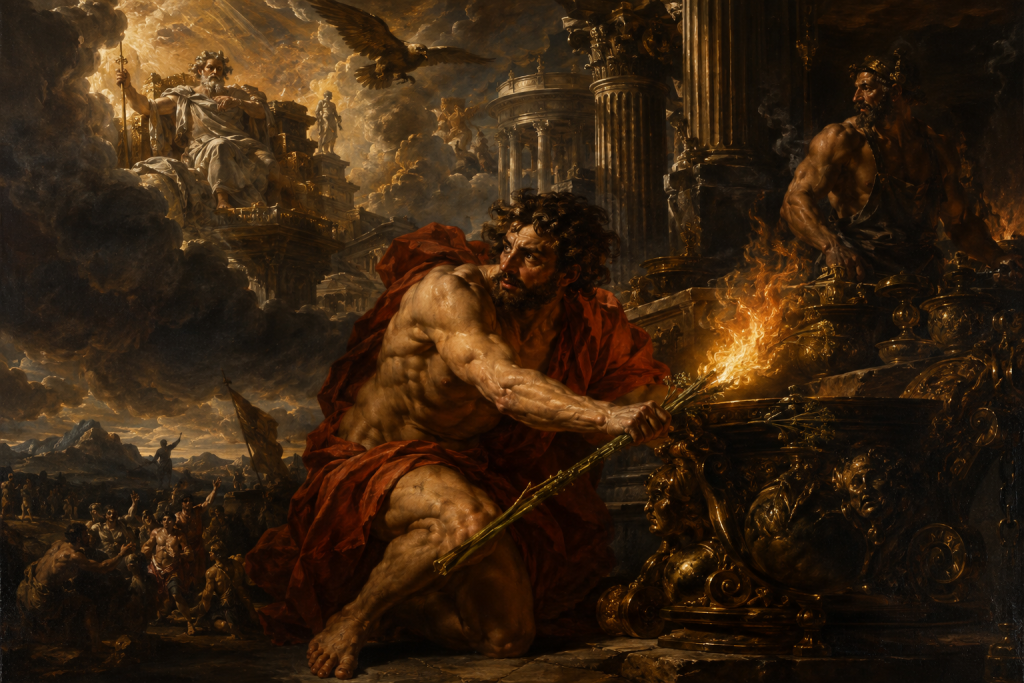
Prometheus stole fire from the gods and gave it to humanity because he felt pity for our cold, weak, short, and defenseless lives.
Fire gave humans warmth in the cold darkness and a way to cook food.
Fire allowed humans to forge tools, build homes, and start a true civilization.
Fire stood for intelligence and the power to think like the gods.
But an act of nobility and generosity did not end well for Prometheus…
…and here we are millennia later, living like gods in a world that is becoming increasingly destructive as a result of our impact on it…
Bill Gates sent a very direct message to world leaders to conclude his essay:
“You have a chance to act now, before unemployment rises sharply, communities are hurting, and public trust has eroded. You can make sure that your government handles the problem holistically, rather than divvying it up into multiple bureaucratic fiefdoms. You can make sure AI benefits everyone. And you can work with other governments to meet this national and global challenge.”
If we are relying on the current composition of American government, technology corporations, religious leaders, scientists, and academics to guide us through this turbulent era of transition…
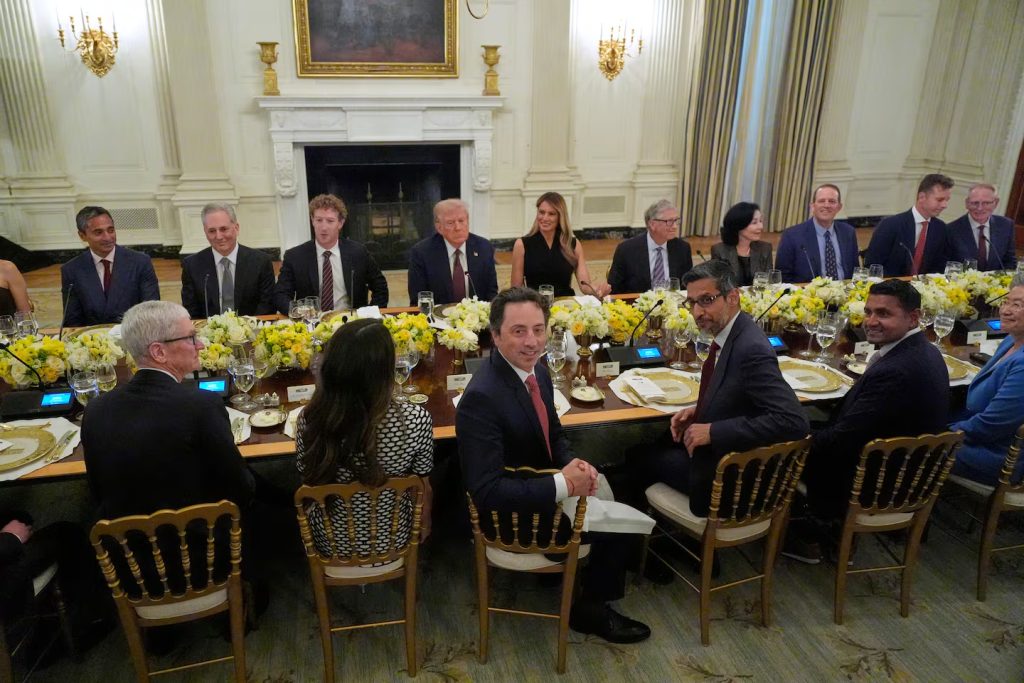
…I really do think the odds are stacked against us.
“Even under the best circumstances, the transition to this new AI era will be one of the most turbulent times in human history.”
The story will play out, no matter what we think or feel at this moment. Because the cascade of events that is leading us into tomorrow was set in motion many, many decades (if not centuries) ago.